Concrete · Fort Worth, TX
Concrete Contractor in Haltom City, TX
Concrete work in Haltom City runs on a different clock than almost anywhere else on our route, because a Haltom City driveway sits on some of the most reactive clay in North Texas. At [Concrete & Paving North Fort Worth](/), we dispatch every job from 5837 Denton Hwy — an address inside the city itself, not a pin on a service-area map. Clay content in Tarrant County frequently tops 50%, and that black gumbo soil can move several inches between a wet spring and a dry August.
That matters in a city built the way Haltom City was: incorporated in 1949, it grew from 42,409 residents in 2010 to 46,073 by 2020, packed into just 12.38 square miles bounded by NE Loop 820, US-377 and SH-183. The crews we coordinate with pour and repair everything from a single-car driveway to a full parking lot along Belknap Street, sized and reinforced for whatever load the property carries.
We know this stretch of Tarrant County because we're parked in it — Birdville and Haltom High Schools both sit inside the same 76117/76137 ZIP footprint we dispatch from daily. Call (817) 710-2599 for a free written quote; we're Open 24 Hours, and a Haltom City job is never a special trip.
Local Service
Concrete Driveways & Slabs for Haltom City's Postwar Housing Stock
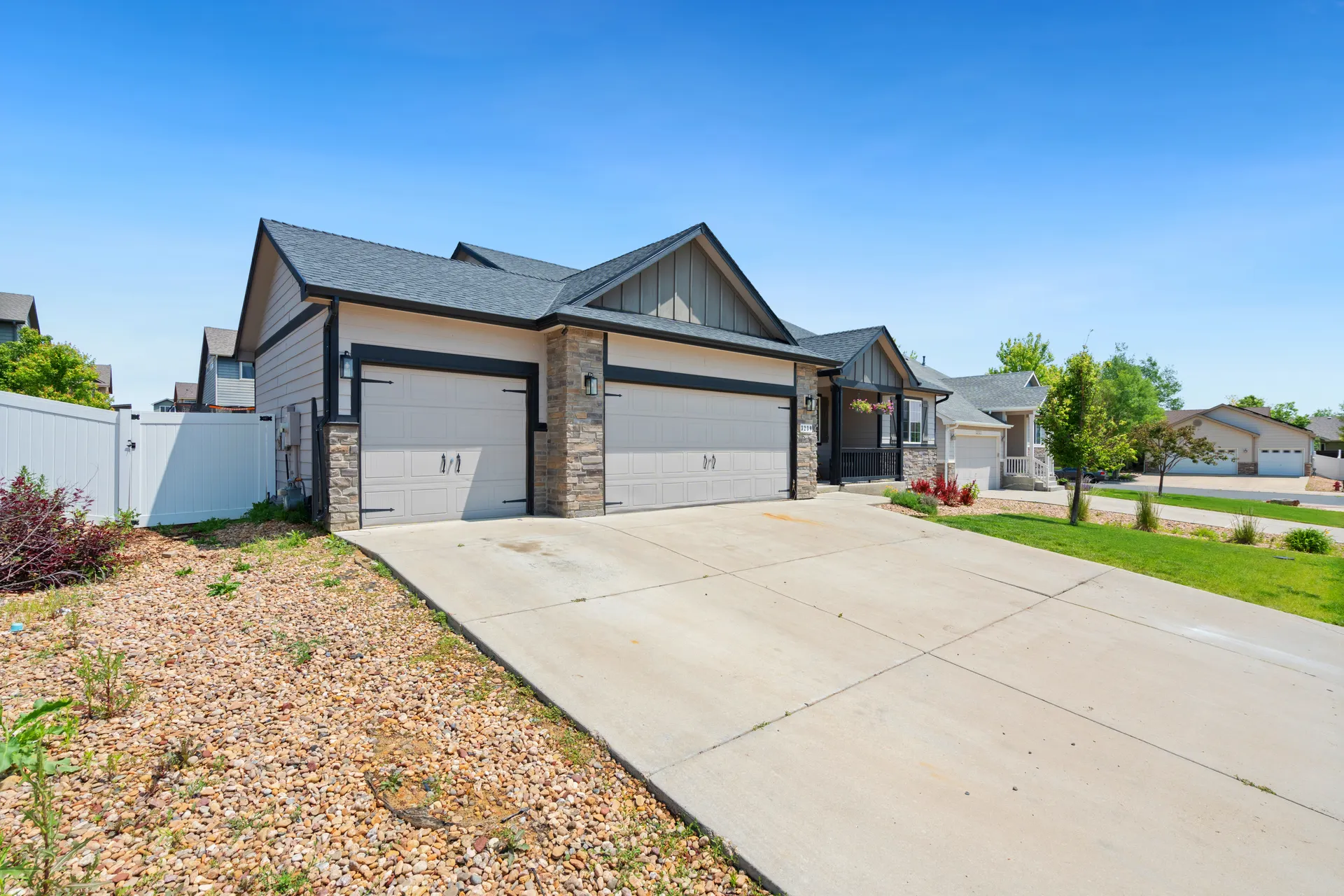
Most of Haltom City's residential core was poured during the 1950s-70s subdivision boom that followed the city's 1949 incorporation, and that original concrete is now decades past a normal service life on soil that never stopped moving underneath it.

Driveway Replacement for Haltom City's 1950s-70s Slabs
Haltom City incorporated in 1949 and grew fastest through the postwar decades that followed, so a large share of the city's residential core is 1950s-70s single-family subdivisions on modest lots — original driveway slabs that have outlived their material. Working out of our own Denton Hwy address a few blocks away, we see the same pattern constantly: hairline shrinkage cracks widened into full breaks, control joints never cut deep enough to steer the crack, and a slab cratered because the original pour was never designed for a decade of clay movement underneath it.
The crews we coordinate with don't default to a full tear-out. We evaluate whether the existing subgrade can be reused with proper compaction and a new 3,500 psi pour, and if the slab's due for a style upgrade, [stamped concrete](/stamped-concrete) is worth pricing alongside a plain broom finish.

Clay-Heave Crack Repair on Haltom City's Black Gumbo Soil
Haltom City sits on the same high-plasticity 'black gumbo' clay running through Tarrant County's Eagle Ford and Woodbine formations, and clay content here routinely exceeds 50% — among the most expansive soil in the country. That soil swells during wet stretches and shrinks hard through the long Texas summer, moving several inches under a driveway or patio slab and heaving straight-line cracks through concrete finished correctly on day one.
The ASCE estimates one in four U.S. homes carries some damage from expansive soils, costing property owners more than earthquakes, floods, hurricanes and tornadoes combined in a typical year. The fix is a properly compacted gravel base, rebar or wire-mesh reinforcement, and control joints cut on the right spacing to steer the crack instead of fighting it.
Slab Leveling for Settled Haltom City Patios and Garage Floors
A slab that's tilted or dropped at one corner in Haltom City is usually a subgrade problem, not a concrete-quality one — the black gumbo clay underneath has shrunk unevenly and left a void the original pour is settling into. It shows up most on garage slabs and patios poured directly on grade, common enough on this soil that we carry mudjacking as a standard line item, not a specialty add-on.
Slab leveling typically runs $500 to $1,700 per project and takes a few hours, versus a full tear-out and repour that can run into the thousands and take a week including cure time. We check whether the slab has cracked through first — one that's simply settled levels cleanly, one that's structurally failed needs to come out.
Local Service
Commercial Concrete Along Belknap and Beach Street
Belknap Street (SH-183) and Beach Street carry Haltom City's heaviest retail and light-industrial traffic, and that traffic asks more of a parking lot's concrete than a quiet residential street ever will.

Parking Lot & Drive Aisle Slabs on Belknap and Beach Street
Belknap Street and Beach Street form the spine of Haltom City's commercial and light-industrial corridor, and the retail centers and warehouses lining them generate steady daily traffic on lots poured decades ago for a lighter load. Concrete drive aisles here take repeated point-loading from delivery trucks and forklifts, and on the same reactive clay subgrade that heaves residential driveways citywide, that combination shows up as slab cracking and joint failure before the concrete is actually worn out.
We size new pours to the property's real traffic — typically 4,000 psi air-entrained concrete with rebar for drive aisles versus a lighter slab for a walkway — and evaluate whether an existing lot needs full-depth replacement or selective section repair before quoting either.

Haltom City Permit Coordination for Concrete Work
Driveway, approach and paving work inside Haltom City's corporate limits requires a permit through the city's own building department — a step covering approach width, drainage and any right-of-way encroachment before a crew breaks ground. Properties in unincorporated Tarrant County pockets just outside the city line fall under county jurisdiction instead, changing who signs off.
Commercial pours along Belknap or Beach Street typically carry more documentation than a driveway repour — drainage calculations, ADA ramp slope, fire-lane striping — and the crews we coordinate with handle the permit application and inspection scheduling, so a Haltom City owner isn't tracking down which office to call.

Sealing & Joint Maintenance for Belknap-Beach Street Lots
About 250,000 new homes are built on expansive soils across the U.S. each year, and while most see only minor damage, about 10% see damage significant enough to matter — a ratio that tracks with what we see on Belknap and Beach Street's older commercial slabs, where failed joint sealant lets water work straight down into the reactive clay below. Once that path opens, seasonal clay movement gets worse, not better.
Penetrating and film-forming sealers run $1 to $3 per square foot, the cheapest maintenance step available, but they only work with sound joint sealant behind them — we check and re-caulk expansion joints on these lots as part of any sealing job.
Local Service
Fast Dispatch From Our Own Haltom City Address
Home-Base Dispatch Inside Haltom City's 12.38 Square Miles
Our address is on Denton Hwy inside Haltom City's 76148 ZIP, so a Haltom City call isn't a dispatch decision — it's the shortest drive on the whole route. At just 12.38 square miles and 16,589 households packed tight, the city is compact enough that we've poured or repaired concrete in most of its neighborhoods more than once.
That proximity means faster on-site subgrade evaluation and a written quote that isn't padded for drive time, whether the job is a single cracked driveway panel or a full lot resurfacing job on Beach Street.

Coverage Bounded by Loop 820, Denton Highway and SH-183
Haltom City is bounded by NE Loop 820, US-377 (Denton Highway), SH-121 and SH-183 (Belknap Street) — a tight highway frame that also defines how fast we move a crew between jobs. We cover all three ZIPs touching the city, 76117, 76137 and 76148, and any address inside those boundaries gets the same fixed-price quoting and scheduling priority as a job a block from our own shop.
Properties in unincorporated Tarrant County pockets just outside those boundary highways are covered too — we confirm which permitting authority applies before a crew starts pouring.

Serving Haltom City and North Richland Hills Together
Haltom City and [North Richland Hills](/north-richland-hills-tx) sit on the same Loop 820 corridor northeast of Fort Worth, and a crew wrapping up a Haltom City driveway is often minutes from an NRH job the same afternoon. Both suburbs sit on the same expansive black-gumbo clay belt, so the same slab heaving and joint failure we see on Beach Street shows up on a predictable schedule up the highway too.
That overlap means a Haltom City owner isn't waiting on a dedicated trip out — the concrete crews we coordinate work this stretch of North Tarrant County daily.
Haltom City is our home base — every job here starts from the same address on Denton Hwy, whether it's a settled patio slab a few streets over or a full lot repour on the Belknap Street corridor. The complete Concrete & Paving North Fort Worth service area radiates out from this city, and the same coordinated crews cover North Richland Hills along the same stretch of Loop 820.
Haltom City's expansive clay subgrade means we spend as much time on concrete repair & resurfacing here as anywhere on our route, alongside concrete driveways for slabs that have outlived their original 1950s-70s pour, concrete patios for cracked and settled backyard slabs, and concrete slabs & foundations for new garage and shed pours. Call (817) 710-2599 any time — we're Open 24 Hours and dispatch already knows this city block by block.
Service Area
Serving Haltom City & Nearby
Frequently Asked Questions
How much does a concrete driveway cost in Haltom City?
A standard concrete driveway in Haltom City runs $6 to $15 per square foot installed, with a typical two-car driveway (400-800 sq ft) landing between $2,400 and $9,600 depending on thickness and access. Haltom City's expansive clay subgrade can push cost above a flat estimate, since reactive soil needs a deeper compacted base and rebar or wire-mesh reinforcement to avoid heaving again. Stamped or exposed-aggregate finishes run higher, commonly $12 to $18 per square foot. We give a written estimate after an on-site subgrade evaluation, never a phone-quote guess.
Why do so many Haltom City driveways crack on the same schedule?
Haltom City sits on high-plasticity 'black gumbo' clay from the Cretaceous Eagle Ford and Woodbine formations, with clay content in Tarrant County often exceeding 50% — among the most expansive soil in the country. That clay swells when wet and shrinks hard through the long Texas summer, moving several inches under anything poured on top of it and heaving cracks through even a correctly finished slab. Postwar 1950s-70s driveways add age on top of that movement. Proper base depth, rebar and correctly spaced control joints reduce, but never eliminate, the seasonal shift.
Do I need a permit to pour a driveway in Haltom City?
Yes — driveway, approach and paving work inside Haltom City's corporate limits requires a permit through the City of Haltom City's building department, covering approach width, drainage and right-of-way encroachment. Properties in the unincorporated Tarrant County pockets bordering the city fall under county jurisdiction instead. We confirm the correct issuing authority for your address before a crew starts and coordinate the permit application and inspection as part of the job.
How long before I can drive on new concrete in Haltom City?
New concrete generally needs about 24 to 48 hours before it's ready for foot traffic and roughly 7 days before it can handle vehicle weight, though it doesn't reach full design strength until close to 28 days after the pour. In Haltom City, we time pours around North Texas's temperature window, since concrete placed below 50°F cures more slowly and hot, dry days call for extra curing care. We'll give a specific timeline based on the day's actual conditions.
Can you pour new concrete over an existing Haltom City driveway?
In some cases, yes — a concrete overlay places a new wear surface over an existing slab that's still structurally sound, faster and less expensive than full demolition and replacement. It only works when the existing slab hasn't cracked through to the subgrade, though, and pouring over cracking driven by expansive clay just telegraphs the same cracks through the new surface within a season or two. We evaluate the existing slab and subgrade on site before recommending an overlay versus a full tear-out.
What's the difference between a settled slab and one that needs full replacement?
A settled slab has usually dropped or tilted because the black-gumbo clay underneath shrank unevenly and left a void, but the concrete itself is still intact — that's a candidate for mudjacking, typically $500 to $1,700 and a few hours of work. A slab that's cracked all the way through, especially with pieces sitting at different heights, has a structural failure that leveling can't fix and needs full-depth removal and a repour. We check for through-cracking before recommending either fix.
Do Haltom City slabs need rebar or wire mesh?
Given how aggressively the black-gumbo clay under Haltom City moves seasonally, we reinforce residential driveways and patios with rebar or welded wire mesh as standard practice, tied into control joints spaced to steer the concrete's natural shrinkage cracking into straight lines instead of random breaks. Commercial slabs along Belknap and Beach Street get a heavier rebar mat and a 4,000 psi mix rated for repeated vehicle loading. Reinforcement doesn't stop clay-driven movement, but it keeps a crack from becoming a structural failure.
What causes cracking and joint failure in Belknap and Beach Street parking lots?
Concrete failure in Haltom City's commercial lots usually starts with water working through a failed joint or hairline crack into the black-gumbo clay subgrade below, which then swells, shrinks and pushes the slab unevenly. Heavy, repeated delivery-truck and forklift traffic on these corridors adds mechanical stress on top of that soil movement, which is why lots there show joint failure earlier than a quiet residential street. Routine joint sealing, $1 to $3 per square foot, and crack repair at $5 to $15 per linear foot keep water out and are cheaper than a full-depth slab replacement later.
What time of year is best for pouring concrete in Haltom City?
Concrete cures best in moderate temperatures, generally above 50°F, so North Texas's spring and fall windows are typically the easiest for a clean pour in Haltom City. Summer pours are workable but need careful timing, since heat and wind both accelerate surface drying and raise the risk of shrinkage cracking before the slab has set. Winter pours are possible on warmer days, but placement below 50°F slows strength gain if not managed carefully. We schedule around the week's actual forecast.
Should I choose concrete or asphalt for a Haltom City driveway?
Concrete generally holds up longer against Texas summer heat and a well-reinforced slab poured to 3,500 psi or higher resists the black-gumbo clay's seasonal movement better than a thinner asphalt section over the same soil. Asphalt is typically the lower upfront-cost option and easier to patch invisibly when clay-driven cracking shows up, while a cracked concrete slab is harder to repair without it being visible. Given how aggressively the clay here moves, we walk each property through both options against its budget.

Get a Free Written Concrete Quote for Your Haltom City Property
Our home-base city — the fastest dispatch on the whole route, Open 24 Hours.
Call (817) 710-2599