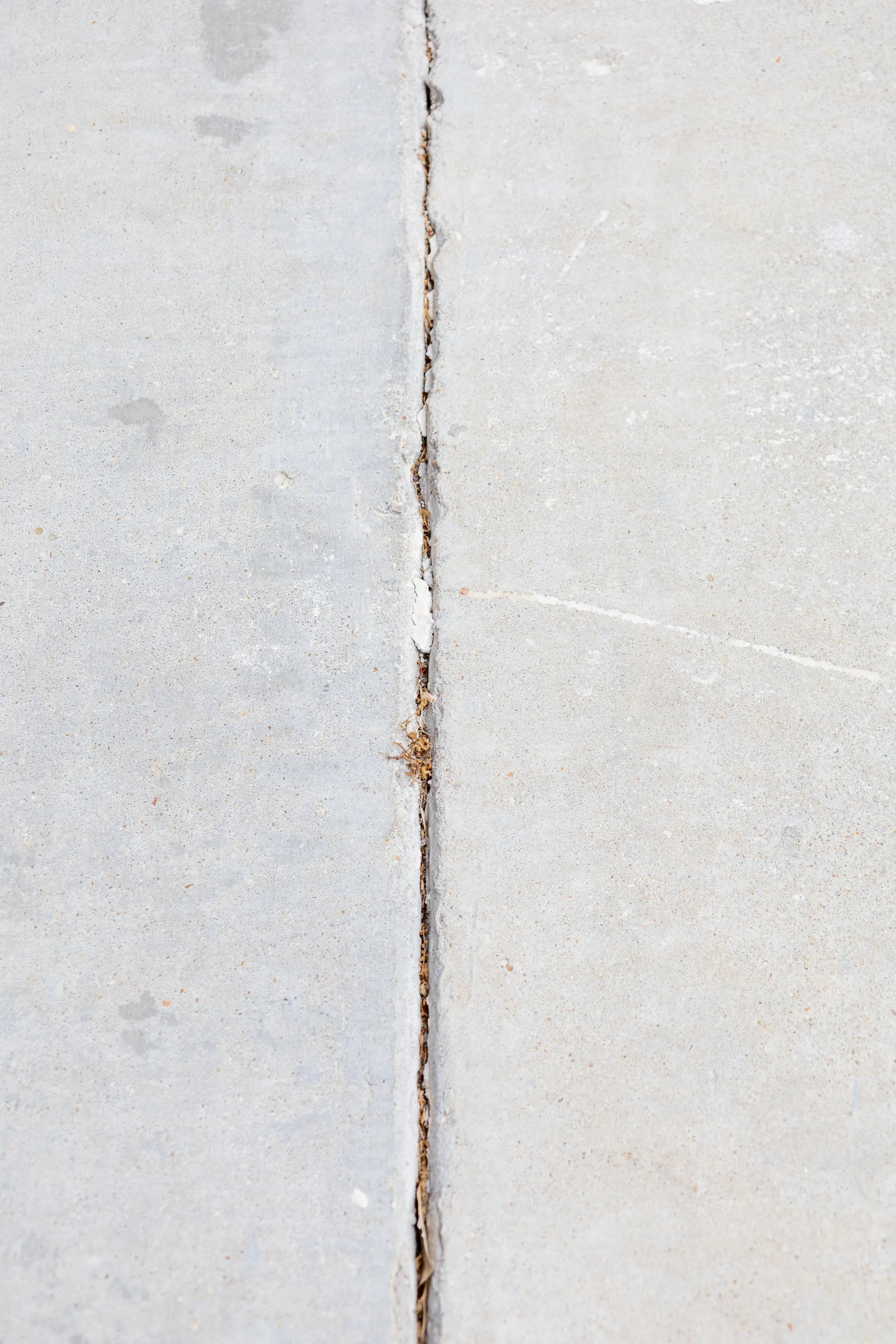
Concrete · Fort Worth, TX
Concrete Repair & Resurfacing in Fort Worth, TX
Concrete & Paving North Fort Worth has coordinated crack repair and injection, spalling and scaling resurfacing, slab lifting and leveling, and concrete overlays across Haltom City, North Richland Hills, Watauga, and Keller for 15 years — call (817) 710-2599 and we're Open 24 Hours to get a crack or a sinking slab assessed fast.
A hairline crack in a driveway or patio is rarely just cosmetic here — it's usually the first visible sign that the expansive clay underneath has already started moving. We inspect before quoting, because a crack that's still tight often just needs injection and sealing, while a section that's heaved, spalled, or settled unevenly needs resurfacing or, in the worst cases, full removal and a proper subgrade rebuild.
Most crack repair and resurfacing jobs run $3 to $10 per square foot, crack injection runs $5 to $15 per linear foot, and slab leveling by mudjacking typically costs $500 to $1,700 per project, finished in 2 to 6 hours.
When Fort Worth homeowners fix a crack or a sunken slab corner early, they're avoiding the point where water working under the concrete turns one repairable crack into widespread settlement that only a full tear-out and repour can fix.
What We Do
Our Concrete Repair & Resurfacing Services in Fort Worth
Not every crack or sunken slab needs the same fix. We diagnose whether the damage is surface-level or base-level before recommending injection, resurfacing, mudjacking, or a full tear-out.

Crack Repair & Injection
Tight, hairline cracks under about a quarter-inch wide typically get routed and filled with a flexible polyurethane or epoxy sealant, which runs $5 to $15 per linear foot and keeps water from working underneath and widening the crack. Wider structural cracks sometimes need epoxy injected under pressure to bond the two sides back together rather than just capping it.
We check whether a crack is still moving seasonally with the clay before recommending a permanent injection repair, since sealing one that's still shifting just means redoing it next year.

Spalling & Scaling Resurfacing
Spalling and scaling show up as flaking, pitted, or peeling concrete surface, usually from freeze-thaw cycling, de-icing chemicals, or a poor original finish that trapped too much surface moisture. Once the damage is surface-deep, a bonded resurfacing overlay — a polymer-modified topping — restores a smooth, durable surface without a full slab replacement.
Resurfacing only works when the base concrete underneath is structurally sound; if the spalling has gone all the way through, that's a removal-and-replace job instead.

Slab Lifting, Leveling & Mudjacking
A sunken slab section — common where a driveway meets a garage or where a walkway settles unevenly on shifting clay — usually gets fixed by mudjacking, pumping a cement-based grout underneath the slab through small drilled holes to raise it back to grade. The process typically takes 2 to 6 hours and costs $500 to $1,700 per project, far less than removing and repouring.
Mudjacking works on slabs that are still structurally sound but have simply settled; a slab cracked into pieces needs repair or replacement first.
The Benefits
Why Repairing Concrete Early Pays Off in Fort Worth
A crack or sunken corner fixed now costs a fraction of what the same damage costs once it's spread across a whole driveway or patio.

A Fraction of the Cost of Full Replacement
Concrete repair and resurfacing runs $3 to $10 per square foot, well under the $6 to $15 per square foot a new driveway or slab costs once demolition, base prep, and a full pour are involved. Catching a crack or a section of spalling early, before it spreads across the whole surface, is almost always the cheaper path.
Keeps Water Out of the Reactive Clay Below
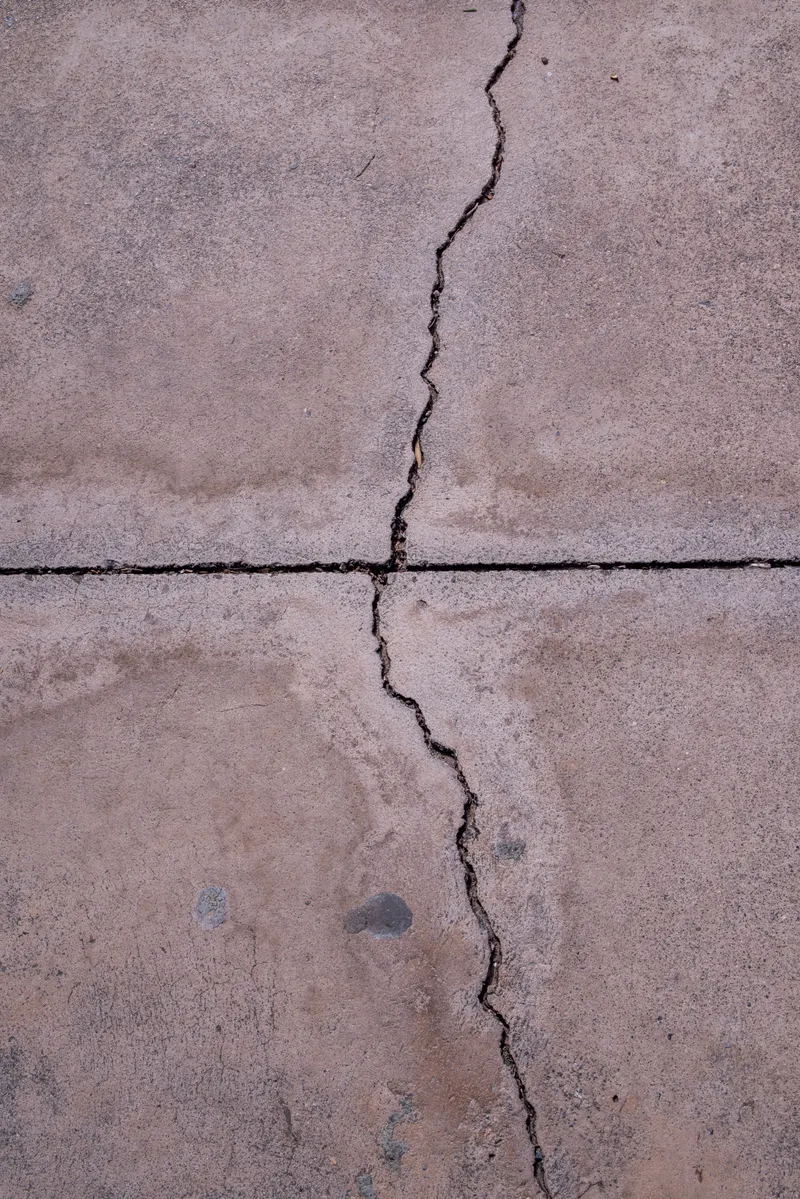
Every open crack in a Fort Worth driveway or patio is a channel straight down to the expansive clay subgrade underneath, and that clay swelling unevenly once wet is what turns one manageable crack into a network of them by the next dry season. The ASCE estimates a quarter of U.S. homes carry some expansive-soil damage, and sealing cracks promptly is the single most effective way to keep that movement from spreading.
An Honest Repair-vs-Replace Read, Every Time
Not every damaged section needs a full tear-out, and not every crack needs to be a five-figure repave. We inspect whether the damage is limited to the surface or has gone into the base before recommending anything, because quoting a replacement when a $400 mudjacking job would fix the settlement isn't how repeat customers get built.
Why Us
Why Fort Worth Chooses Us for Concrete Repair
Fifteen years of repairing concrete on reactive clay means we diagnose the actual cause before quoting the fix.
Crews Certified on Flatwork & Field Testing
The crews we coordinate with hold ACI Concrete Flatwork Finisher and Field Testing Technician certifications, are fully licensed and insured, and follow ACI 302 guidance on resurfacing and repair bonding — the difference between a patch that stays bonded for years and one that delaminates within a single summer.
We Know Which Neighborhoods Crack First
Watauga packs roughly 23,650 residents into just 4.16 square miles of almost entirely 1970s-90s construction, so nearly its whole driveway and patio stock is the same age and cracking on the same shifting clay at once — knowing that pattern means a faster diagnosis before a crew shows up with a saw.
Repair Quotes That Don't Default to Replacement
Every repair call starts with an honest read on whether the base has failed or just the surface, because recommending a full removal and repour when a crack injection or mudjacking job would hold isn't how we've stayed busy across the Mid-Cities.
A crack or a sunken corner rarely stays a small problem on this soil, so if the damage has spread past what injection or mudjacking can fix, our concrete slabs page covers what a full rebuild involves, and our concrete driveways page covers replacement for a failed driveway. The same North Fort Worth concrete crew that diagnoses repair-vs-replace across Haltom City, North Richland Hills, and Watauga handles the full services lineup too — call (817) 710-2599 and we'll tell you honestly which fix your concrete needs.
Frequently Asked Questions
How much does concrete repair cost in Fort Worth?
Concrete repair and resurfacing typically runs $3 to $10 per square foot depending on the extent of damage and the method used, while crack injection and sealing is priced by the linear foot at $5 to $15. Slab leveling through mudjacking is priced per project rather than by area, usually landing between $500 and $1,700 depending on how much the section has settled. A single hairline crack sealed with polyurethane is often the least expensive fix on this list, while a resurfacing overlay across a full driveway costs more but still comes in well under a full tear-out and repour.
How do you repair a crack in a concrete driveway or patio?
Tight, hairline cracks under about a quarter-inch wide are routed out and filled with a flexible polyurethane or epoxy sealant, which keeps water from working underneath the slab and widening the crack over the next wet-dry cycle. Wider or structural cracks sometimes need epoxy injected under pressure to actually rebond the two sides rather than just capping the surface. We check whether a crack is still actively moving with seasonal clay shifts before committing to a permanent repair, since sealing one that's still shifting usually means redoing the work within a year. Cost runs $5 to $15 per linear foot.
What is mudjacking, and how long does it take?
Mudjacking raises a sunken slab section — common where a driveway meets the garage apron or where a walkway has settled unevenly — by pumping a cement-based grout underneath the concrete through small drilled holes until it lifts back to grade. The process typically takes 2 to 6 hours per project and costs $500 to $1,700, a fraction of removing and repouring the same section. It only works on slabs that have simply settled; a slab cracked into separate pieces needs repair or replacement first. Traffic can generally resume within a day, much faster than a fresh pour's cure time.
What causes spalling and scaling on concrete surfaces?
Spalling and scaling show up as flaking, pitting, or peeling on the surface of a slab, most often caused by freeze-thaw cycling working on concrete that wasn't air-entrained, de-icing chemicals, or a finishing technique that trapped too much surface moisture during the original pour. Once the damage stays surface-deep, a bonded resurfacing overlay — a polymer-modified topping — restores a smooth, durable surface without replacing the whole slab. If the deterioration has gone all the way through the concrete's depth, the section needs full removal and replacement instead.
How do I know if I need repair or full replacement?
Repair and resurfacing make sense when damage is limited to isolated cracks, surface spalling, or a section that's settled but otherwise structurally sound — most of these jobs run $3 to $10 per square foot or a flat mudjacking fee well under $2,000. Full replacement becomes the better option once more than roughly a third of a driveway shows widespread cracking, multiple sunken sections, or a base that's failed rather than just the surface, since a new pour starting around $6 to $15 per square foot outlasts chasing repairs on a compromised subgrade. Our [concrete slabs](/concrete-slabs) page covers what a full rebuild involves.
Why does concrete crack so much in North Fort Worth specifically?
Haltom City, North Richland Hills, and Watauga all sit on high-plasticity black gumbo clay that swells several inches when wet and shrinks hard through the long, dry summer, and that seasonal movement transfers straight up into whatever's poured on top of it. The ASCE estimates that a quarter of all U.S. homes carry some damage from expansive soils, a bigger annual financial hit nationally than earthquakes, floods, hurricanes, and tornadoes combined. Add intense summer UV and the occasional winter freeze-thaw cycle prying an existing crack wider, and concrete here cracks on a shorter timeline than in a less reactive region.
What's the difference between resurfacing, an overlay, and full replacement?
Resurfacing and an overlay are essentially the same idea — a thin, polymer-modified concrete layer bonded over an existing sound slab to restore a smooth, damage-free surface without demolition, typically costing $3 to $10 per square foot. Full replacement means removing the old concrete and, where needed, correcting the subgrade before pouring a new slab, which runs $6 to $15 per square foot but is the only real fix once the base itself has failed. Resurfacing only holds up when the concrete underneath is structurally sound; bonding a new surface over a slab that's still actively cracking just repeats the same failure with a fresh coat on top.
How long does a concrete repair or resurfacing job last?
Crack injection and sealing typically holds for a full season to a couple of years depending on how much the surrounding slab continues to move, and most of our repair work carries roughly a one-year warranty on the treated area. Resurfacing overlays generally last 10 or more years when the underlying slab is sound and properly bonded and sealed, though how long depends on traffic and sun exposure. Mudjacked slabs typically hold their new elevation for years unless the same drainage or clay-movement issue goes unaddressed. We flag any underlying cause so the repair isn't undone by the same problem later.
Do I need a permit for concrete repair or resurfacing in Haltom City, North Richland Hills, or Watauga?
Routine repair work — crack sealing, resurfacing an existing slab, or mudjacking a sunken section — generally doesn't trigger the same permitting process as new construction, since you're restoring an existing surface rather than changing the footprint. That said, each of the three cities runs its own building department rather than routing through Tarrant County, and any repair that touches the public right-of-way, changes drainage, or involves repouring a large section can fall under different rules. We confirm what applies to your address and scope before starting.
Can I repair a cracked or sunken driveway myself, or is it better to hire a pro?
A small, cosmetic hairline crack can sometimes be filled with a DIY concrete caulk from a hardware store, but that's a surface-level fix that doesn't address whether the crack is still actively moving with the clay underneath it. Structural cracks, spalling that's gone deep into the slab, and any settled or sunken section need professional diagnosis, since the wrong fix — sealing over a crack that's still shifting, or a cosmetic patch instead of mudjacking — just means paying for the repair twice. Professional crack injection, resurfacing, and mudjacking all use equipment that isn't practical for a homeowner to rent and use correctly on a single job.
Is a repaired or resurfaced driveway as strong as a new one?
A properly bonded resurfacing overlay restores a durable, load-bearing surface, but it's only as strong as the slab underneath it — resurfacing a structurally sound driveway gives you a like-new surface at a fraction of new-pour cost, while resurfacing over a failing base just delays the same problem. Crack-injected repairs can restore most of a crack's original bond strength when caught early, before the crack has widened or spalled at the edges. Mudjacked slabs regain their original bearing capacity once releveled, since the process fills the void that caused the settlement rather than just masking it. We only recommend repair when the base itself checks out.
Get Your Concrete Repaired, Not Replaced Unnecessarily
Crack repair, resurfacing, and slab leveling. Call (817) 710-2599 for an honest read.
Call (817) 710-2599